Shopping for a wrap gets confusing fast, because the words scarf, pashmina, wrap, and shawl are used interchangeably even though they describe different things. If you have ever wondered what pashmina sizes actually mean, or why one seller’s cashmere pashmina feels twice as luxurious as another’s, this guide is for you. We will walk through pashmina dimensions in plain inches, compare cashmere vs viscose pashmina fabrics, sort out shawl vs wrap terminology, and explain how pashmina fabric weight changes how a piece drapes and how warm it keeps you. By the end you will know exactly which pashmina size and material fits your purpose, whether that is everyday layering or a formal event.
The core difference is size, and size is where pashmina sizes get misunderstood. Here is the simplest way to think about the four terms:
The overlap is real: a wide pashmina and a narrow shawl can be nearly the same piece. What matters when you buy is not the label but the actual dimensions, so always check width by length in inches.
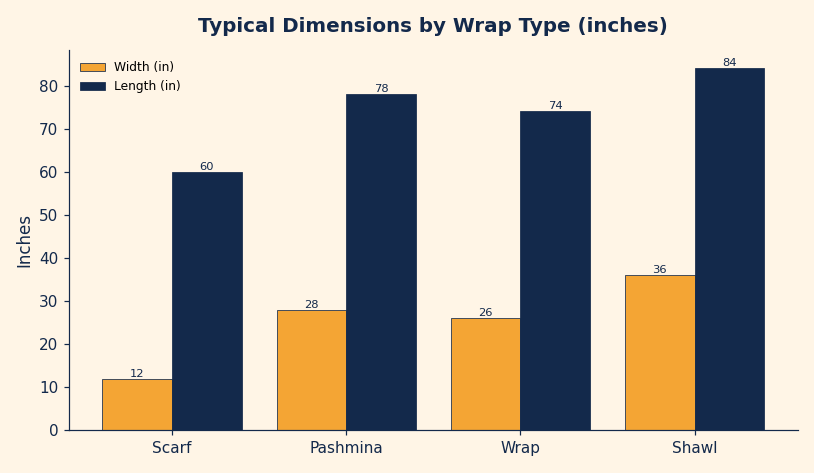
Because names blur together, the most reliable way to compare is a straight look at pashmina dimensions. The chart below lays out typical width and length in inches for each type, so you can see how a scarf, a pashmina, a wrap, and a shawl actually stack up.
A few takeaways. A scarf’s short width is what limits it to neck wear. A pashmina at roughly 28 by 78 inches is the versatile all-rounder: wide enough to cover the shoulders, long enough to loop, drape, or belt. A wrap sits just under those numbers, and a shawl adds width and length for full coverage over a gown. If you want one piece that does the most jobs, a standard pashmina size is the sweet spot.
Lay the piece flat and measure the short edge for width and the long edge for length, excluding fringe. Comparing that against the chart tells you far more than the product name. If a listing does not publish dimensions, treat that as a reason to ask before buying.
Dimensions are not just numbers on a tag; they decide how many ways you can style a piece. A narrow scarf really only knots at the neck. Once you reach standard pashmina sizes, options open up: draped straight down the front, wrapped once around the shoulders, looped, belted at the waist over a dress, or folded into a triangle across the back. The extra width of a shawl lets it stay put over the shoulders without constant adjusting, which is exactly what you want over eveningwear. If you tend to fidget with a wrap that keeps slipping, the fix is usually more width, not a different fabric. When in doubt, size up: a slightly larger wrap can always be folded, but a small one can never be made bigger.
Size determines coverage; fabric determines feel, warmth, and price. The two most common pashmina materials sit at opposite ends of that spectrum, with silk and wool blends in between.
The original pashmina fiber, cashmere is prized for being remarkably warm for its weight, soft against the skin, and naturally insulating. It is the most expensive option and the most luxurious, ideal for a keepsake piece or cold-weather wear. It needs gentle care and occasional de-pilling.
Viscose (sometimes labeled rayon or art silk) is a plant-based fiber that gives a smooth, silky drape at a fraction of the cost. In the cashmere vs viscose pashmina comparison, viscose wins on price and sheen and is easy to dye in vivid colors, which is why it dominates event favors and fashion wraps. It is lighter and less insulating, so it reads more as an elegant accessory than a warm layer.
Blends aim for the best of both. A silk-cashmere blend adds luster and strength; a wool-cashmere blend boosts warmth and durability at a lower price than pure cashmere. Blends are a smart middle path when you want quality feel without the top-tier cost.
Fabric choice also sets your maintenance routine. Cashmere and wool blends do best with gentle hand washing in cool water or dry cleaning, laid flat to dry, and a soft comb or cashmere stone to lift the occasional pill. Viscose is generally easier day to day but can lose body if machine washed hot, so cool water and air drying keep the drape intact. Whatever the fiber, fold wraps rather than hang them, since hanging over time can stretch the fabric and distort the shape. A little care keeps a quality pashmina looking new for many seasons, which is part of why buyers treat cashmere pieces as long-term keepsakes rather than disposable accessories. You can see how we source and finish different fabrics on our custom pashmina studio home page.
Beyond fiber type, pashmina fabric weight, measured in grams per square meter (GSM), tells you how substantial and warm a piece will be. A lightweight viscose wrap floats over the shoulders for spring evenings; a heavy cashmere pashmina wraps like a blanket for winter. The chart below compares typical weight and a relative warmth rating across four common materials.
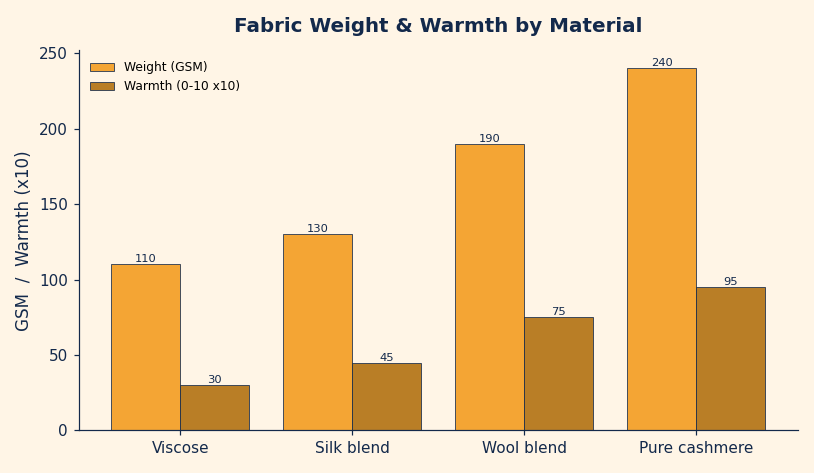
Use weight to match the piece to its job. For an outdoor autumn gala, a wool blend or cashmere around 190 to 240 GSM keeps guests genuinely warm. For a summer wedding or a bright fashion accessory, a viscose wrap near 110 GSM drapes beautifully and photographs vividly without overheating the wearer.
Put the two dimensions together and the choice gets easy:
Planning wraps for a large group or event is its own puzzle, since you are balancing budget, warmth, and a consistent look across many pieces. Our guide to corporate pashminas for events and galas walks through bulk sizing, colors, and branding for exactly that scenario. For more on care, colors, and styling, browse the rest of our blog.
Around 28 inches wide by 78 inches long is the most common. It covers the shoulders, drapes and loops well, and suits most body types.
A cashmere or wool-blend pashmina is significantly warmer than a lightweight viscose wrap of the same size, because both fiber type and higher fabric weight add insulation.
Yes. We produce custom wraps in specific dimensions, fabrics, and dyed-to-match colors. See our about page or reach out through the contact page to discuss a custom run.
Tell us your purpose, preferred size, and fabric and we will recommend the best option, whether it is a single custom wrap or a bulk order for an event.
Get a QuoteEnter below for a chance to win plus receive 10% off your first order.
Check your email for your 10% off code. Good luck!

 Call or Text us: (929) 605-4397